Did you know there's only one American holiday written into our Constitution? It's Repeal Day, commemorating the repeal of Prohibition through the ratification of the 21st Amendment.
Ironically, the origins of this boozy celebration stem from the early Temperance Movement, a 19th-century awareness campaign that emerged to limit alcohol consumption in the US. Let's delve into the full story of how an anti-booze sentiment led to a constitutional holiday celebrating our right to drink!
From Temperance to Prohibition
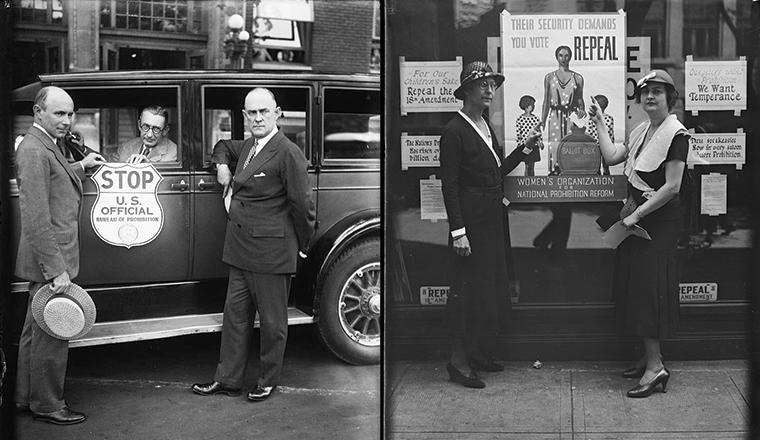
Motivated by religious principles and health concerns, women comprised a significant portion of the advocacy base for the Temperance Movement. They argued that alcohol consumption fostered many pressing social issues like domestic abuse, poverty, illness, and crime. The movement ultimately transformed into a more radical platform of "teetotalism," or total abstinence from alcohol.
The Civil War brought a temporary halt to efforts, as state tax revenue earned through liquor sales was needed to repay the country's expenditures. Of course, the distraction was short-lived.
The 1870s marked the next wave of Temperance, and this time, advocates focused on organized efforts to change policies and permanently halt alcohol consumption. Led by the activism from organizations like the Women's Christian Temperance Union (WCTU), the country was driven toward a Prohibitionist mindset.
Prohibition's Unintended Consequences
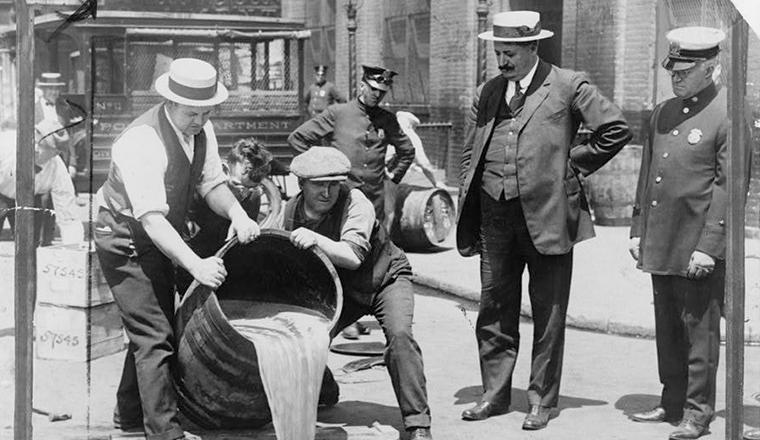
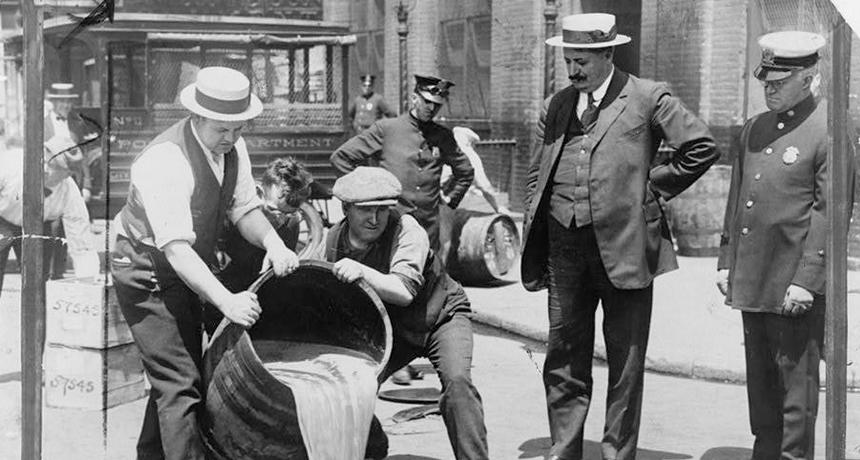
On January 16, 1919, Congress passed the 18th Amendment enacting Prohibition, which forbade the sale, production, and transportation of alcohol. However, this outright ban did not yield the desired consequences of widespread sobriety.
The very social problems that Temperance ideals sought to eliminate were amplified under Prohibition. The restrictive policies resulted in a disgruntled nation whose thirst for alcohol only grew. Speakeasies, illegal bars often hidden behind an innocuous storefront, cropped up by the thousands in major cities like New York. Bootlegging became a rampant enterprise of organized crime families who profited from the illegally manufactured and distributed liquor sold at a low price, including alcohol not fit for consumption. This wave of crime and indulgence, coupled with the economic prosperity and cultural shifts of the time, created an era known today as the "Roaring Twenties."
Fatal tragedies made newspaper headlines, such as the St. Valentine's Day Massacre, a retaliatory attack on Al Capone's rival gangster, George "Bugs" Moran. It was not uncommon for police officers and other officials to receive bribes in the form of "tribute" from illicit parties.
The Bureau of Prohibition put out a report to showcase the rampant nature of bootlegging and highlight the challenge of controlling illegal liquor across 48 states (Hawaii and Alaska were still territories at the time). According to The Mob Museum, the report found that the number of distillation stills seized by law enforcement grew from 32,000 in 1920 to 261,000 in 1928. It was also reported that around 118 million gallons of wine and 683 million gallons of beer were illegally produced in 1930.
In fact, the onset of the Great Depression in 1929 only exacerbated the already spiraling situation. With growing unrest and dissatisfaction with what would later be called "The Great Experiment," the nation took up the rallying cry to repeal the 18th Amendment from the Constitution. In the 1932 presidential election, Franklin D. Roosevelt won a sweeping victory on a platform that included the repeal of Prohibition.
Cheers to Repeal Day!
On December 5th, 1933, after 13 years of Prohibition, Utah made history as the final state needed to win a three-quarters majority that would ratify the revisionary 21st Amendment. While the amendment still allowed for state and local levels of Prohibition, there were no state laws banning alcohol by 1966. The nation could officially enjoy a legal drink.
December 5th continues to be celebrated as Repeal Day, especially in the spirits and distilling industry. You can celebrate too! Join us in raising a glass and toasting to our nation's history and the enduring traditions of craft distilling. Cheers!
Have a drink idea? Flavorman can help you bring it to life. Give us a call at (502) 273-5214 or contact our team through this webform.
Related Blog Articles
Repeal Day: America's Only Constitutional Holiday
blog
Did you know there's only one American holiday written into our Constitution? Ironically, the origins of this boozy celebration also start with the early Temperance Movement, an awareness campaign that…
For decades, spirits and cocktails have fostered a culture of craft, connection, and celebration. But over time, cocktail culture has evolved far beyond the buzz!
Those that are familiar with the process of crafting distilled spirits may also be familiar with the 10 common congeners that are created during fermentation, and honed during the distillation run. Each congener has its own distinct personality, rendering unique tastes and aromas to the finished spirit.